Microcement London: Transforming Homes & Commercial Interiors in 2026

Microcement Bathrooms London: Transform Your Space with Deco Cemento
26th January 2024
Microcement has become one of the most distinctive finishes in contemporary interior design, creating beautifully seamless surfaces with a character that conventional tiles, paint and flooring simply can’t replicate.
Across London, microcement is being used to transform everything from luxury bathrooms and contemporary kitchens to entire living spaces, retail environments, restaurants and commercial interiors.
Its combination of versatility, durability and unmistakable appearance makes it particularly well suited to modern renovation projects, where the same decorative finish can flow across floors, walls and other suitable surfaces to create an incredibly cohesive interior.
At Deco Cemento, we specialise in microcement in London, working with homeowners, architects, interior designers and commercial clients to create bespoke finishes tailored to each individual property.
So, why does microcement continue to grow in popularity in 2026, and could it be the right choice for your next project?

What Is Microcement?
Microcement is a specialist cement-based decorative coating used to create seamless, contemporary surfaces.
Unlike conventional concrete, it is applied in very thin layers, typically just a few millimetres and it can be installed over a variety of suitable existing substrates.
Once professionally applied and finished, microcement creates a continuous surface without the repetitive patterns and prominent grout lines associated with tiles.
Its versatility is one of its greatest strengths.
Microcement can be used across floors and walls as well as many other suitable interior surfaces, allowing a consistent material and design language to continue throughout a room.
And although concrete-inspired interiors are often associated with industrial grey, modern microcement offers an extensive choice of colours, tones, textures and finishes.
The result can be as subtle or as dramatic as the project demands.
Why Is Microcement So Popular in London?
London presents an incredibly diverse mix of properties.
Period townhouses sit alongside contemporary apartments, warehouse conversions, new-build developments and ambitious architectural extensions. Commercial spaces are equally varied, encompassing everything from independent boutiques and restaurants to offices, hotels and large retail environments.
Microcement works beautifully across this variety.
In contemporary interiors, it can reinforce clean lines and minimalist architecture. Within older properties, its seamless appearance can provide a striking contrast to original features, creating an interior that feels modern without erasing the character of the building.
Its minimal thickness can also make microcement particularly attractive for renovation projects.
Rather than introducing a substantial new surface, microcement can often be applied over suitable existing substrates, although every project needs to be assessed individually before installation.
For London properties where completely removing existing finishes may be disruptive, this can be a significant advantage.

Microcement is the perfect material for high-end commercial and retail properties across London 
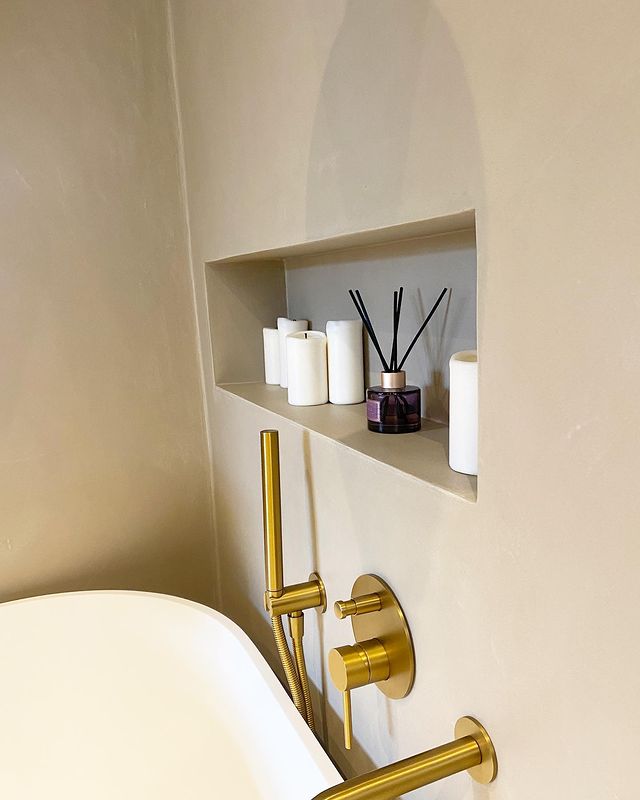
Microcement always brings character and practicality to every bathroom 
Bathroom bliss thanks to our Microcement installations in London
Microcement for London Homes
One of the reasons microcement has become so popular with homeowners is that it isn’t limited to one particular room or application.
Used thoughtfully, it can become a defining element of the entire interior.
Microcement Bathrooms
Bathrooms are perhaps one of the most recognisable applications for microcement and it’s easy to understand why.
The continuous appearance of microcement allows walls and floors to flow together without the grid of grout lines created by conventional tiles.
This can produce the beautifully calm, minimalist appearance associated with luxury hotels and contemporary spas.
Microcement is also available in a huge variety of tones and finishes, so a microcement bathroom doesn’t necessarily mean creating a cold or industrial space.
Warm neutrals, natural earthy shades, soft greys and deeper dramatic tones can all create completely different atmospheres.
For homeowners looking to create a genuinely bespoke bathroom, microcement offers enormous creative freedom.
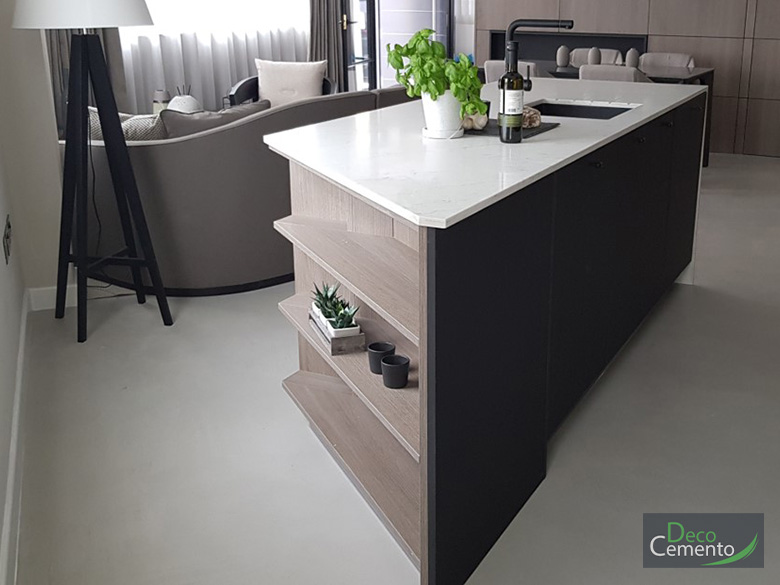
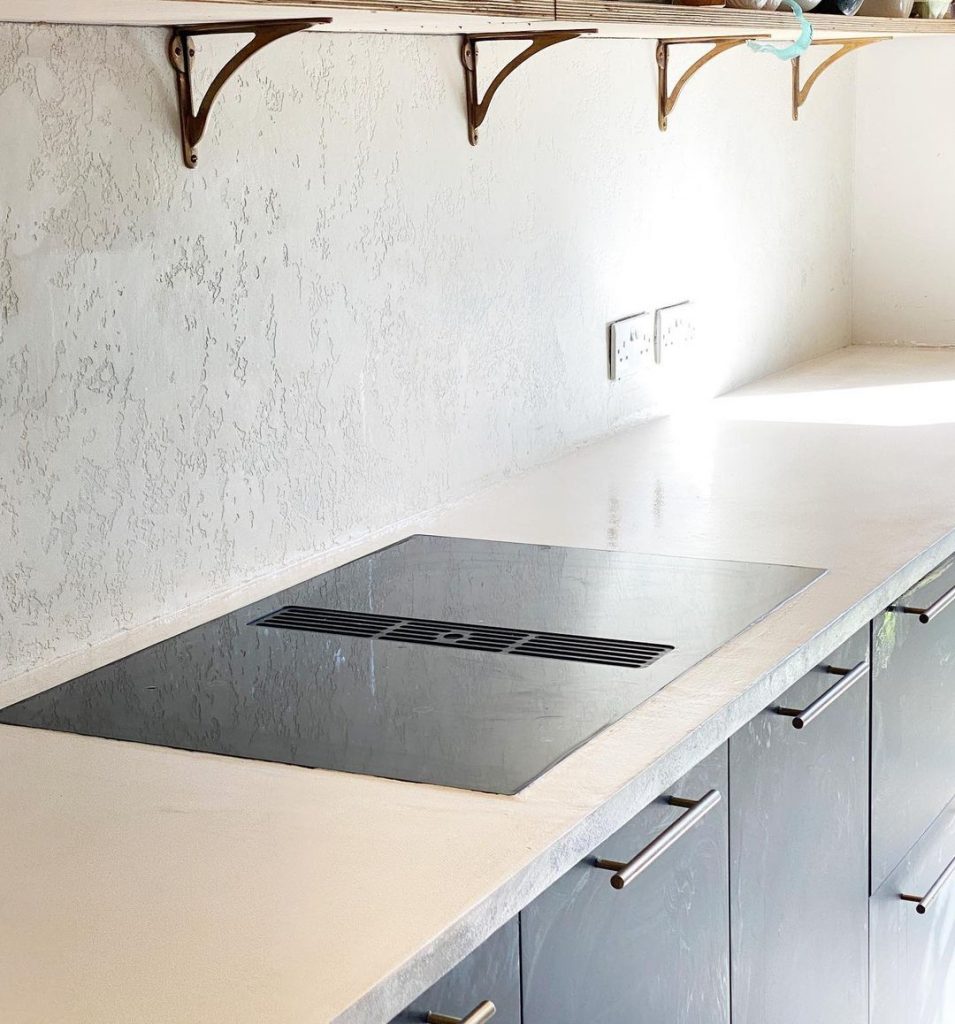
Microcement Kitchens
The kitchen has increasingly become the centrepiece of the modern home, particularly within London’s open-plan renovations and extensions.
Microcement provides an understated backdrop that works beautifully alongside other premium materials.
Combine a textured cement finish with timber cabinetry, natural stone, metal, glass or contemporary handleless units and each material is allowed to retain its own character.
Microcement can be used on suitable kitchen walls and floors as well as selected architectural surfaces, allowing the finish to become part of the wider interior design rather than simply another wall or floor covering.
Its seamless appearance is particularly effective within larger open-plan spaces where maintaining visual continuity is important.

Microcement Floors
For homeowners who love the appearance of concrete but require a thin decorative system suitable for their particular renovation, microcement flooring can provide an attractive alternative.
A microcement floor creates a continuous surface without traditional grout lines, allowing subtle variations in tone and texture to become part of its character.
This works particularly well across open-plan kitchens, dining rooms and living spaces, where changing flooring materials can visually divide an otherwise connected room.
Instead, microcement can help the entire space feel cohesive.
Every project is different, however, and the condition, stability and suitability of the existing substrate are particularly important when considering a microcement floor.
Microcement Walls & Feature Walls
Microcement can be just as impressive vertically as it is underfoot.
A feature wall finished in microcement introduces depth, texture and natural variation that can’t easily be recreated with conventional paint or wallpaper.
Rather than adding a pattern to the wall, the surface itself becomes the feature.
This can work particularly well behind fireplaces, televisions and within large living areas, hallways or open-plan spaces.
Depending on the chosen colour and finish, a microcement wall can be deliberately dramatic or incredibly subtle.
Open-Plan Living & Contemporary Extensions
Some of the most impressive uses of microcement can be found within contemporary extensions and open-plan renovations.
Large expanses of glazing, rooflights and carefully considered artificial lighting can emphasise the subtle movement and texture within the finish, changing its appearance throughout the day.
The ability to use complementary finishes across multiple surfaces also helps tie different areas of a large space together.
For a modern London extension where architecture, materials and natural light are all central to the design, microcement can feel like part of the building itself rather than something simply applied afterwards.

Refy London – Commercial microcement application by Deco Cemento 
Zara Home in London – Commercial Microcement by Deco Cemento Microcement is the perfect material for high-end commercial and retail properties across London 
Commercial microcement details – Bespoke microcement by Deco Cemento London Commercial Microcement installation in London
Microcement for Commercial Interiors in London
Microcement isn’t restricted to residential interiors.
Its distinctive appearance and versatility have also made it an increasingly attractive finish for London’s commercial and hospitality sectors.
Applications can include:
- Retail stores and boutiques
- Restaurants, cafés and bars
- Hotels and hospitality spaces
- Offices and workplaces
- Salons and studios
- Showrooms
- Gyms and leisure environments
- Reception and communal areas
For commercial clients, interior finishes have an additional responsibility.
They don’t just need to complement the architecture, they become part of how customers experience the brand.
A carefully selected microcement finish can provide a subtle backdrop for products and furniture or become one of the defining visual elements of the entire space.
Its bespoke nature is particularly valuable here which is why we’re seeing a huge demand for Microcement in London 2026.
Rather than selecting an identical mass-produced tile or surface used in countless other properties, colour, tone and texture can be chosen specifically around the interior concept.
Why Microcement Works So Well for Renovations
One of microcement’s biggest advantages is its remarkably thin application.
At only a few millimetres thick, microcement doesn’t require the depth associated with conventional concrete and can potentially be applied over a variety of suitable existing surfaces.
This can make it particularly useful during renovations where floor levels, thresholds and existing architectural details need careful consideration.
It can also reduce the need to completely remove certain existing finishes where the substrate is stable, properly prepared and suitable for the chosen system.
However, the preparation beneath microcement is every bit as important as the visible finish.
Microcement isn’t designed to disguise an unsuitable or unstable substrate. Correct assessment and preparation are essential to achieving a high-quality result.
That’s one of the reasons professional installation is so important.
Is Microcement Waterproof?
This is one of the most common questions surrounding microcement, particularly from clients considering it for bathrooms and other wet environments.
A professionally specified microcement system can be used within bathrooms and other appropriate areas, with the complete build-up and protective finishing system playing an important role in its performance.
It is important to think of microcement as a complete system rather than simply a decorative layer.
Correct substrate preparation, application and sealing are all crucial, particularly in areas regularly exposed to moisture.
This is also why specialist installation matters considerably more than simply achieving the right colour or texture.
Is Microcement Durable?
When professionally installed onto an appropriate, correctly prepared substrate, microcement creates a hard-wearing decorative surface suitable for a wide variety of residential and commercial applications.
Its durability has helped make it popular for spaces extending far beyond private bathrooms and feature walls.
However, as with natural timber, stone and other premium finishes, microcement isn’t indestructible.
The intended use of the space, underlying substrate, chosen system and ongoing care should all be considered when specifying the finish.
For commercial environments in particular, understanding expected levels of traffic and use allows the appropriate system to be selected from the outset.
Is Microcement Easy to Maintain?
The seamless nature of microcement is one of its most attractive practical characteristics.
With no conventional tile grout lines breaking up large areas of the surface, routine cleaning and maintenance can be relatively straightforward.
This is particularly appealing within bathrooms, kitchens and larger open-plan areas where numerous grout joints can otherwise require additional attention.
The correct cleaning and maintenance products should always be used to protect the finished surface, and clients should follow the specific care recommendations provided for their installation.
With appropriate care, a quality microcement finish can retain its distinctive appearance for years to come.
Microcement Colours & Finishes in 2026
One of the biggest misconceptions surrounding microcement is that it has to look grey and industrial.
It doesn’t.
While classic concrete-inspired greys remain incredibly effective, contemporary microcement can be produced in an extensive range of colours and tones.
Warmer neutrals can soften a minimalist interior, while earthy colours work beautifully alongside natural timber and stone. Darker finishes can create drama and contrast, while pale shades can help maintain the bright, spacious feeling of a contemporary room.
Texture is equally important.
The hand-applied nature of microcement creates subtle movement and variation across the surface, giving the finished interior a depth and individuality that is difficult to reproduce with a factory-manufactured material.
Rather than simply asking which microcement colour is fashionable in 2026, we recommend considering the architecture, lighting and surrounding materials within the property.
A carefully chosen finish should still look beautiful long after today’s interior trends have moved on and having your property transformed by Microcement in London 2026 will be a lasting investment!
Take a look at a selection of our most popular colours below and simply get in touch using the details below to schedule a consultation. We’ll look forward to hearing from you!